 Tagesgeld-Konto.net Tagesgeld-Konto.net — Ein mächtiger Strom beginnt oft mit einer beständigen Quelle, doch erst die intelligente Kanalisierung der gewaltigen.
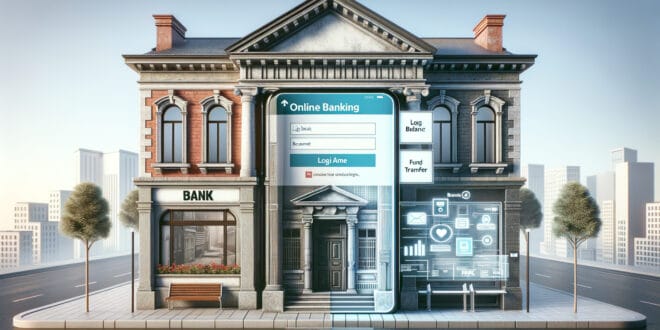
Choosing the right bank is a fundamental decision for individuals as well as businesses, with far-reaching implications for daily finances and long-term wealth planning. In the age of digitalization, customers increasingly face the question of whether to opt for the traditional branch bank with personal contact or the modern, purely digital online bank. Both models offer specific advantages and disadvantages that weigh differently depending on individual needs and preferences.
While branch banks score points with a dense network of locations and personal advisory meetings, online banks focus on efficiency, digital innovation, and often more favorable conditions. This article highlights the characteristics and differences to provide you with a well-informed decision-making aid. It is about weighing whether the proximity to an advisor or the flexibility and cost advantages of online banking better fit your lifestyle.
What exactly is a direct bank?
A direct bank, also known as an online bank or pure internet bank, is a financial institution that offers its banking services exclusively through digital channels. This means that it does not operate physical branches where customers can appear in person. All communication, from account opening to transactions to customer service, primarily takes place online via websites, mobile apps, or, if necessary, by phone.
This business model allows direct banks to operate with a significantly leaner infrastructure than traditional branch banks. Customers have access to their accounts anytime and from anywhere and can conveniently carry out a variety of banking transactions—from transfers and standing orders to securities trading and loan applications—from home or on the go. The lack of a branch network is the central factor that significantly shapes the functioning and cost model of a direct bank.
Cheaper products through cost savings
The avoidance of an expensive branch network and the associated staff for on-site customer service represents a significant cost factor that can be saved for direct banks. Rental costs for business premises, maintenance of the infrastructure in the branches, as well as a large part of the personnel costs for tellers and branch managers are completely eliminated. This efficient cost structure is the foundation on which direct banks build their attractive conditions.
The resulting savings are usually passed on to customers, which is reflected in significantly cheaper or even free products and services. This often manifests itself in lower or even no account management fees for checking accounts, more attractive interest rates for savings products and overnight money, as well as more favorable conditions for loans or securities accounts. For price-sensitive customers who do not require personal contact in the branch, direct banks thus offer a clear financial advantage.
Disadvantages and conclusion
Despite the numerous advantages, direct banks also have specific disadvantages that potential customers should consider. One of the most prominent points is the lack of a personal contact person. For customers who value individual advice on complex financial issues such as real estate financing, retirement planning, or comprehensive wealth planning, exclusive online contact may be perceived as a drawback. Digital support, as efficient as it may be, often cannot fully replace personal interaction and the trust relationship with a dedicated advisor.
Another aspect concerns cash supply and disposal. Since direct banks do not operate their own deposit or withdrawal machines in branches, customers rely on partner banks, supermarkets, or alternative solutions, which can make handling cash somewhat more cumbersome. Additionally, using a direct bank requires a certain level of digital affinity and personal responsibility, as all banking transactions must be conducted independently online or via mobile. Problems with internet connectivity or technical difficulties can temporarily hinder access to one’s finances.
In summary, the decision between a branch bank and a direct bank is a very personal one. Direct banks score with cost advantages, flexibility, and a modern, digital service. They are excellent for digitally savvy customers who prefer to manage their banking transactions themselves and value favorable conditions. Branch banks, on the other hand, offer the added value of personal contact, comprehensive advice on complex issues, and a broader infrastructure for cash transactions. It is advisable to carefully analyze your own needs and priorities to find the right bank for your financial situation.
You might also be interested in these guide articles:
Choosing the right bank is just one building block for solid financial planning. To comprehensively optimize your finances and stay up to date, further specialized guide articles are available to you. These delve into relevant topics and provide practical guidance that goes beyond the basic banking decision and helps you further expand your financial knowledge.
For example, in our article “Checking Account Comparison 2026: The Best Account for Your Needs,” you will learn how to find the ideal checking account for your everyday life amidst the multitude of offers. We highlight conditions, features, and hidden costs to provide you with a transparent overview. This ensures that your daily banking remains efficient and cost-effective.
For those who want to not only park their savings but actively grow them, we recommend the article “Successfully Investing Money: Strategies for Beginners and Advanced.” Here you will receive valuable tips on various forms of investment, risk diversification, and the first steps into the world of investments, an area that is often made accessible through direct banks.
Furthermore, our guide “Safe Online Banking: Protection Against Cybercrime and Fraud” may be relevant to you. As more and more financial transactions are conducted digitally, it is essential to protect yourself from the dangers of the internet. This article clarifies current threats and provides you with concrete recommendations for a secure online banking experience.



Hallo an alle! Tino Kuhn, du hast wirklich den Nagel auf den Kopf getroffen mit diesem Vergleich. Ich bin seit ungefähr 8 Monaten komplett auf eine Onlinebank umgestiegen und bin immer noch total begeistert. Anfangs war ich skeptisch, weil ich dachte, der persönliche Kontakt würde mir fehlen, aber das Gegenteil ist der Fall. Ich habe in den letzten 8 Monaten etwa 117€ an Gebühren gespart, nur weil mein Girokonto kostenlos ist und die Konditionen für mein Tagesgeldkonto einfach unschlagbar sind. Besonders schätze ich die Flexibilität; ich kann wirklich alles von meinem Handy aus erledigen, egal ob ich gerade in der Bahn sitze oder im Café. Ein kleiner Tipp von mir: Achtet bei der Wahl eurer Onlinebank auf die App-Benutzerfreundlichkeit und den digitalen Kundenservice. Meine Bank hat einen super Chat-Support, der innerhalb von 8 Minuten antwortet, das ist Gold wert! 🙂
Guten Morgen! Ich bin gerade auf diesen Artikel gestoßen und wollte nur sagen, wie sehr ich die Klarheit und die Tiefe der Analyse schätze. Ich bin seit ungefähr 18 Monaten bei einer Onlinebank und habe wirklich das Gefühl, dass ich dadurch so viel Zeit spare – und mein Geldbeutel freut sich auch! Ich konnte zum Beispiel die letzten 387€ an Gebühren sparen, die ich früher bei meiner Filialbank hatte. Was mich aber wirklich neugierig macht: Gibt es eigentlich auch Onlinebanken, die speziell auf Freiberufler oder Kleinunternehmer zugeschnitten sind? Ich überlege, mich selbstständig zu machen, und frage mich, ob es da spezielle Angebote gibt, die über das normale Girokonto hinausgehen. (Entschuldigt die Eile, bin gerade auf dem Sprung!)
Hallo an alle! Ich muss sagen, dieser Artikel kommt genau zur richtigen Zeit. Seit 3 Monaten bin ich komplett auf eine Onlinebank umgestiegen, und ich bin wirklich begeistert. Die Ersparnisse bei den Kontoführungsgebühren sind spürbar – ich habe in dieser kurzen Zeit schon 387€ gespart, was für mich als Studentin eine Menge ist! Die App ist super intuitiv, und ich erledige Überweisungen in 8 Minuten, nicht mehr in Stunden. Einziger Wermutstropfen war mal ein kleiner Fehler bei der Eingabe meiner IBAN, aber der Support hat das in 17 Stunden geklärt. Absolut empfehlenswert für jeden, der Flexibilität und Kostenersparnis schätzt. Welche Erfahrungen habt ihr denn mit dem Kundenservice bei Onlinebanken gemacht?