 Tagesgeld-Konto.net Tagesgeld-Konto.net — Ein mächtiger Strom beginnt oft mit einer beständigen Quelle, doch erst die intelligente Kanalisierung der gewaltigen.
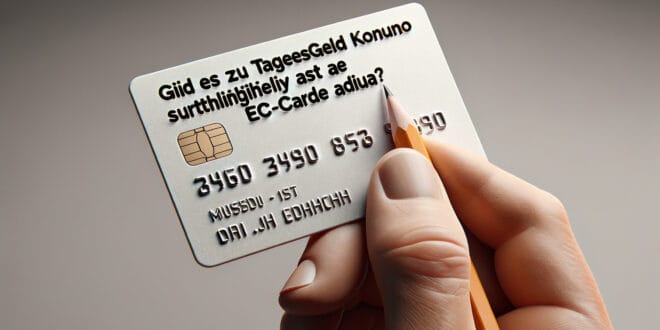
A savings account is primarily designed as an investment account that offers savers a flexible way to invest money profitably. It is characterized by its high liquidity, as the deposited amounts are available daily and are usually interest-bearing at a higher rate than a traditional checking account. The focus here is on saving and short- to medium-term investment, not on daily transactions.
The direct answer to the question is therefore usually: No, a savings account typically does not come with a debit card (now called Girocard). The reason lies in the clear separation of functions between an investment account and a payment account. A debit card is used to make cashless payments in stores or to withdraw cash from ATMs. These functions are explicitly reserved for the checking account.
The savings account is not designed for active payment transactions. It does not have an IBAN that could be used for transfers from third parties and is also not directly connected to payment systems. All transactions, such as deposits or withdrawals, are carried out exclusively through a so-called reference account, which is usually a checking account at the same or another bank. Funds are transferred from this reference account to the savings account and also booked back there.
This conscious distinction significantly contributes to the security and clarity of financial products. Your savings balance in the savings account is thus less exposed to direct risks that could be associated with the use of a card in everyday life. The strict separation ensures that your savings primarily serve the purpose of interest generation and are not accidentally used for everyday expenses.
Paying from the savings account with a credit card?
Direct payment with a credit card that accesses a savings account is also generally not possible. A credit card is a payment method issued by banks or financial service providers and is usually directly linked to the cardholder’s checking account. This checking account serves as the billing account from which the accumulated credit card transactions are debited at regular intervals.
The savings account, on the other hand, is, as mentioned, not intended for payment transactions. It does not have the necessary interfaces to function directly as a source for credit card debits. The operation of a credit card is based on a short-term credit limit, the use of which is processed through the checking account primarily used for payment transactions.
However, an indirect connection can be established: If you have sufficient funds in your savings account and wish to use this to cover your credit card bill, you must first transfer the required amount from the savings account to your reference checking account. Only after this manual transfer can the due credit card bill be easily debited from your checking account.
This procedure again underscores the clear separation of product features: The savings account serves as a liquidity reserve and for interest gain, while the credit card is designed for flexible, cashless payments with a temporary credit limit. The efficient use of both products requires an understanding of their specific functions and their respective connections to your primary checking account.




Bonjour! Ich muss sagen, dieser Artikel kommt genau zur rechten Zeit für mich. Ich bin noch ziemlich neu in der Welt der Geldanlage und hatte genau diese Frage im Kopf, ob man eine Karte zum Tagesgeldkonto bekommt. 🤔 Tino Kuhn, vielen Dank für die super Erklärung! Es ist wirklich gut zu wissen, dass der Fokus auf dem Sparen liegt und nicht auf dem Zahlungsverkehr. Das macht total Sinn und hilft mir, meine Finanzen besser zu strukturieren. Ich hab vor ein paar Wochen ein Tagesgeldkonto eröffnet und finde die Zinsen echt ansprechend – viel besser als auf meinem Girokonto! Es beruhigt mich auch, dass mein Erspartes so sicher ist und nicht versehentlich für Alltagsausgaben draufgeht. Top erklärt, danke!
Hey, ich bin gerade über diesen Artikel gestolpert und muss sagen, das ist super erklärt! Ich war echt neugierig, ob man eine EC-Karte zum Tagesgeldkonto bekommen kann, und jetzt ist alles kristallklar. Manchmal sind diese Finanzthemen so verworren, aber hier wurde es wirklich einfach und verständlich auf den Punkt gebracht. Klasse Arbeit!
Hallo zusammen!
Ich bin so froh, diesen Artikel auf Tagesgeld-Konto.net gefunden zu haben! Ich hatte tatsächlich immer ein bisschen Unklarheit bezüglich der EC-Karte bei einem Tagesgeldkonto. Eure Erklärung ist super präzise und hat mir wirklich geholfen, den Unterschied zwischen Spar- und Zahlungskonto besser zu verstehen. Es ist beruhigend zu wissen, dass mein Spargeld nicht für den täglichen Zahlungsverkehr genutzt werden kann – das gibt mir ein echtes Gefühl von Sicherheit.
Besonders gut gefällt mir die Betonung auf die „klare Trennung der Funktionen“. Das macht total Sinn und ist für mich als jemand, der seine Finanzen gerne übersichtlich hält, ein großer Pluspunkt. Ich habe jetzt auch verstanden, warum das Referenzkonto so wichtig ist.
Wie handhabt ihr das mit euren Referenzkonten? Nutzt ihr dafür euer Haupt-Girokonto oder habt ihr ein separates, nur für diese Überweisungen?
Hallo an alle! Ich freue mich, diesen Artikel hier auf Tagesgeld-Konto.net zu sehen. Der Beitrag von Tino Kuhn bringt es wirklich auf den Punkt. Ich nutze selbst ein Tagesgeldkonto und die Klarheit, dass es eben kein Girokonto-Ersatz ist, war für mich von Anfang an entscheidend. Diese Trennung finde ich persönlich sehr beruhigend, da mein Erspartes so wirklich nur für die Anlage da ist und nicht versehentlich im Alltag ausgegeben wird.
Ich finde es super erklärt, dass die EC-Karte (oder Girocard) und die Kreditkarte an ein Girokonto gebunden sind. Das Referenzkonto-Prinzip ist auch eine super Sache für die Sicherheit. Ich überweise immer einen Teil meiner Einnahmen direkt vom Girokonto auf mein Tagesgeldkonto und sehe, wie die Zinsen sich langsam summieren. Letzten Monat waren es immerhin 17,34 Euro an Zinsen, was auf dem Girokonto undenkbar wäre.
Ein kleiner Gedanke, den ich noch hinzufügen möchte: Manchmal wünsche ich mir eine noch schnellere Möglichkeit, kleinere Beträge vom Tagesgeldkonto aufs Referenzkonto zu transferieren, wenn ich mal kurzfristig etwas mehr brauche. Aber das ist wirklich Jammern auf hohem Niveau und hat eher mit meiner eigenen Planung zu tun als mit dem Produkt selbst. Insgesamt eine sehr gute und informative Zusammenfassung! 🙂